
Warriors, Rangers and Clerics
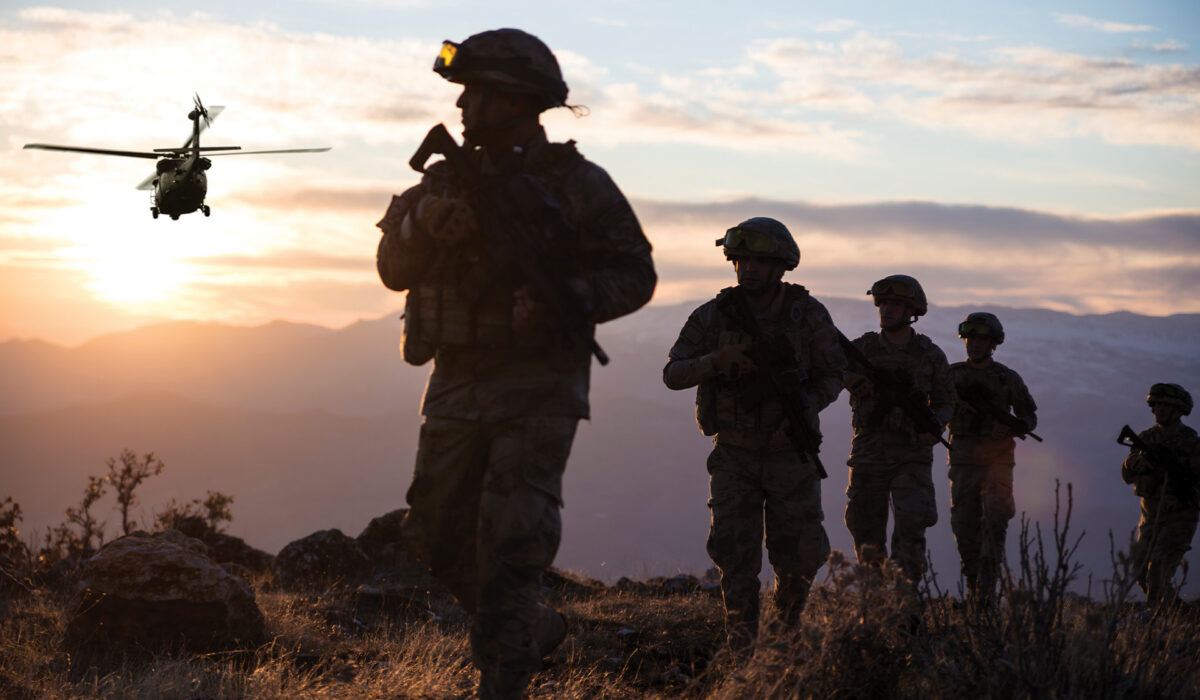
An honest look at joining the armed forces after high school.
Like any major life decision, enlisting deserves a clear-eyed look at what you gain and what it costs.
The Branches of the Armed Forces
The Army is the largest branch, with roughly 450,000 active-duty soldiers involved in everything from infantry combat to cyber warfare, engineering, logistics and medicine. The Army has the most job variety of any branch and the most bases worldwide. It’s also the branch most likely to involve extended deployments to land combat zones.
The Navy operates at sea, in the air above the sea and in special operations on land. Sailors can spend months aboard ships, often in cramped quarters with little privacy. The Navy also runs nuclear submarines and operates some of the most advanced aircraft in the world.
The Air Force focuses on air and space superiority, intelligence and long-range strike capability. Airmen tend to have better base amenities than other branches and a slightly more corporate feel. Career paths in aviation, cybersecurity, space operations and intelligence are major draws.
The Marine Corps is a rapid response force known for its demanding culture and emphasis on combat readiness. Marines are often the "first in" to conflict zones and train to some of the toughest standards in the military. The Corps has fewer total jobs than the Army but a strong identity and community spirit.
Space Force focuses on satellite operations, space surveillance and protecting U.S. interests in orbit. It’s technically sophisticated, relatively small (approximately 10,000 personnel) and doesn’t involve traditional combat deployment.
Coast Guard handles search and rescue, maritime law enforcement, drug interdiction and port security. It’s smaller and less combat-focused than other branches and deployments look very different.
The Money: Signing Bonuses and Pay
Base pay for an enlisted member at the lowest rank (E-1) starts at around $22,000 per year. By E-5, you’re looking at roughly $40,000 in base pay. Service members also receive:
- Basic Allowance for Housing (BAH) to cover off-base housing.
- Basic Allowance for Subsistence (BAS) to help with food costs.
- Free healthcare for you and your dependents while on active duty.
- Free dental care.
- 30 days paid vacation per year.
When you add base pay plus allowances, the total compensation for an E-4 or E-5 is often competitive with many entry-level civilian jobs, especially when you factor in zero housing costs if you live on base.
Signing bonuses are real but highly variable, ranging from $2,000 — $40,000 depending on the military occupational specialty, the branch’s current needs and your qualifications. Bonuses are paid out over time and if you leave the service before your contract ends, you may have to pay it back.
Education Benefits: The GI Bill and Tuition Assistance
This is arguably the most powerful thing the military offers. The Post-9/11 GI Bill is available to veterans who serve at least 90 days of active duty. At its maximum benefit (serving the full 36 months), the Post-9/11 GI Bill covers full in-state tuition and fees at any public school; up to $27,000 per year towards private school tuition; a monthly housing allowance and a $1,000 stipend for books and supplies.
Add Partial Service benefits:
Tuition Assistance (TA) is different from the GI Bill. It’s an active-duty benefit that pays for college courses while you’re still serving (up to $250 per credit hour / $4,500 per year). Many service members use TA to chip away at a degree during their enlistment, then use the GI Bill afterward.
Career Training: What You Actually Learn
The military produces genuinely skilled workers. Depending on your MOS or rate, you can come out with training that translates directly to civilian careers.
- Some examples of military jobs with strong civilian crossover:
- Many combat medics become paramedics and nurses.
- Cybersecurity roles translate neatly in similar civilian jobs and may come with security clearance (which can increase base pay by $20,000).
- Pilots are in demand in both the military and commercial travel.
- Electrical, engineering and linguistics skills open doors to a wide range of career paths.
The Parts the Ads Don’t Show
You can be deployed — repeatedly. This means missed family events, relationships strained by distance and time away from everything familiar. The military owns your time. You don’t clock out at 5 pm or call in sick. Your haircut, tattoos, living arrangements — all are regulated. Combat has lasting effects. PTSD affects 11-20% of veterans who served during war time and our systems for treating it remain imperfect. Contracts are binding in ways civilian jobs aren’t. If you take a job at Target and hate it, you quit. In the military you signed a contract and leaving early is a federal crime.
The Question of Fit
Joining the military can be a great fit for some, but it’s not always a one-size-fits all option for everyone. People who often thrive in military service tend to appreciate structure and clear expectations, who find meaning in group mission and unit cohesion, who want to get out of their hometown and see the world, who are looking for a path to education and skills without taking on debt or who are drawn to the physical and professional challenges.
Choosing to serve in the military is not for everyone. But for the right person at the right time, it offers real money, real education, real skills and real experiences that civilian life rarely replicates.

0 Comments